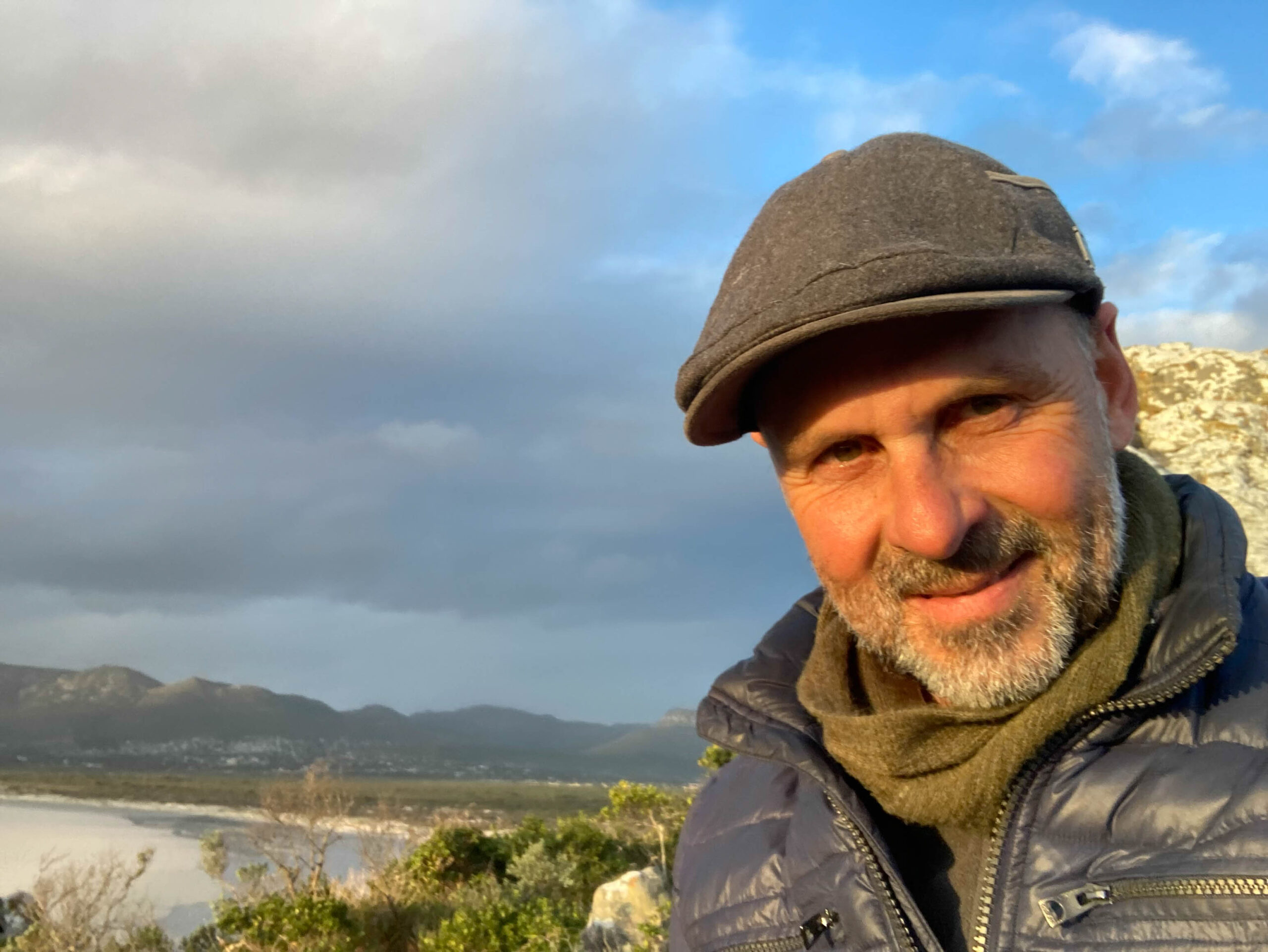
Adam van Niewenhuizen
Principal Landscape Architect and Environmental Planner
Adam van Niewenhuizen is a South African landscape architect and environmental planner with over 25 years of experience working across Africa and the Middle East. His work focuses on the transformation of urban and rural landscapes into resilient, socially grounded, and ecologically responsive environments.
Trained at the University of Pretoria and the University of Cape Town, Adam brings together design, systems thinking, and environmental planning. His approach is rooted in reading the landscape—understanding the layered relationships between ecology, infrastructure, and human use—and translating these into clear spatial strategies and built form.
Before establishing his independent practice in 2004, Adam worked as a Senior Landscape Architect for the City of Cape Town. There, he contributed to a number of foundational public projects, including the Blaauwberg Conservation Area, Edith Stephens Wetland Park, Princess Vlei, and key inner-city public space upgrades such as the Foreshore pedestrian network.
Since then, his work has expanded across diverse geographies and scales—from large-scale urban frameworks to detailed public space interventions. Notable projects include the Chiveve River rehabilitation in Beira, Mozambique; Agodi Park in Ibadan, Nigeria; the Kings Beach redevelopment in Gqeberha; and multiple public space and infrastructure projects across South Africa.
In parallel, Adam has worked extensively in Saudi Arabia as lead designer on high-level projects and international design competitions. His involvement in these large-scale initiatives has engaged with ambitious national development agendas, complex environmental conditions, and the rapid transformation of new urban landscapes—further sharpening his ability to operate at strategic and territorial scales.
His projects are recognised for their ability to integrate ecological systems with public life—transforming degraded or underperforming landscapes into active, legible, and enduring places.
Adam has received design awards from the Institute for Landscape Architecture in South Africa (ILASA) for projects including Kings Beach, the Cape Town Foreshore, and Agodi Gardens.
Alongside practice, he contributes to teaching at the University of Cape Town, working with postgraduate students in landscape architecture and environmental design.